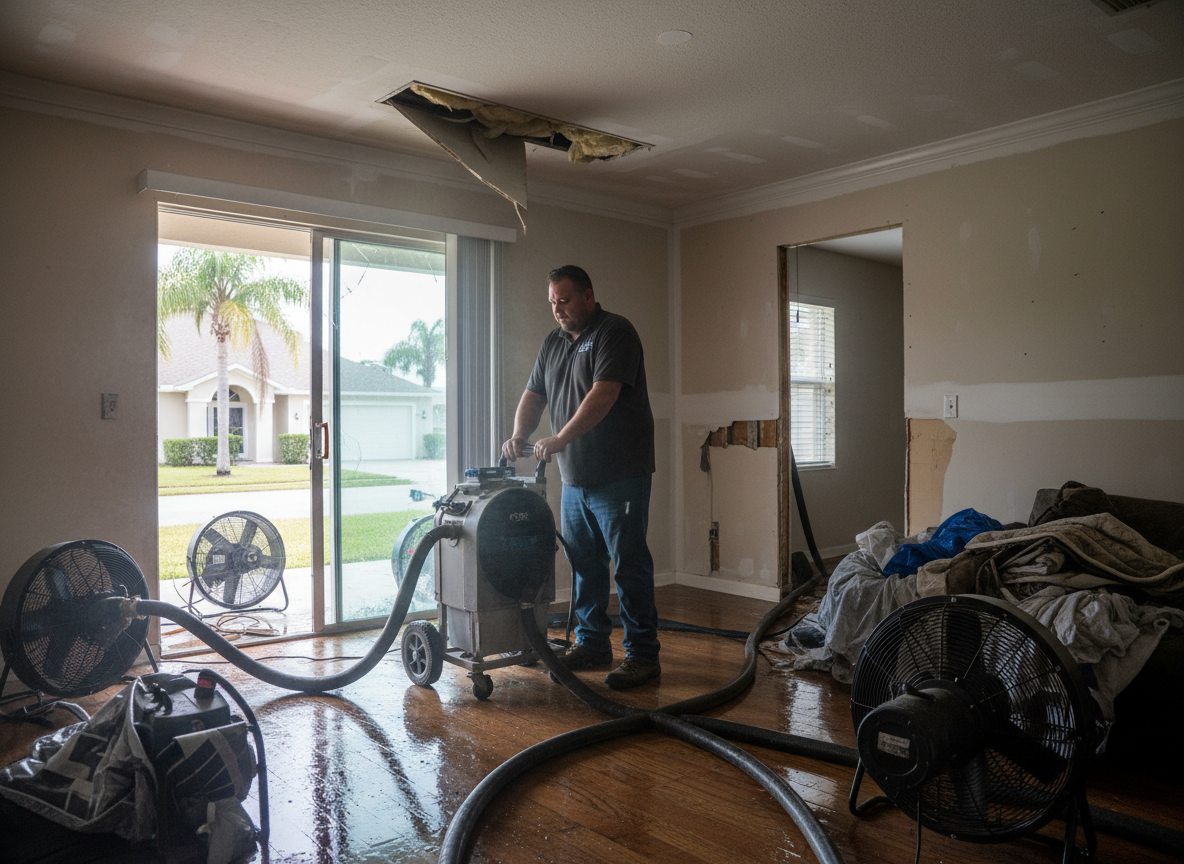
Port St. Lucie homes, especially those built on slab foundations in neighborhoods like St. Lucie West and Tradition, often see water migrate under concrete after heavy summer rains or hurricanes. Once moisture reaches the slab edge or enters through plumbing penetrations, it travels laterally and creates hidden saturation in subfloors and base plates. Restoration crews must pull baseboards early and use moisture meters on the slab to map the full extent before any drying equipment is placed.
Hurricane season from June through October brings the biggest volume of calls, with wind-driven rain entering around windows and through roof valleys common on the ranch-style houses that dominate St. Lucie County. When water sits against stucco or enters vinyl siding, it quickly soaks insulation and drywall from the back side. Technicians cut inspection holes high and low to confirm the water line and avoid trapping moisture behind new finishes.
After extraction, dehumidifiers must run longer here than in drier climates because relative humidity rarely drops below 70 percent even on clear days. Leaving any residual moisture in carpet pad or under vinyl plank allows mold to colonize within 48 hours in the warm local temperatures. Final clearance readings are taken on both the slab and the wood framing before any reconstruction begins.
Technician insight
In Port St. Lucie the thing that catches most people out with water damage restoration is how fast moisture moves laterally under the slab in the older St. Lucie West homes; if you only dry the visible floor you will be back in six months when the base plates start to rot.
Post-storm water under slab in Tradition
Heavy rain from a tropical system pushed water under the slab of a 2008 home in Tradition. Meters showed elevated readings three feet inward from the exterior walls. Crews extracted water, ran slab drying for six days, removed base plates, and dried the framing before new drywall was installed.
Water Damage Restoration Service Services We Offer
✓Emergency Water Extraction
Rapid removal of standing water from floors and carpets after storms or appliance failures to limit secondary damage in Port St. Lucie homes.
✓Structural Drying
Placement of air movers and dehumidifiers to pull moisture from drywall, subfloors, and slab edges common in St. Lucie County construction.
✓Mold Prevention After Water Damage
Application of antimicrobial treatments and removal of affected materials before mold growth accelerates in the area's high humidity.
✓Drywall and Insulation Removal
Cutting out saturated drywall and insulation up to the water line to prevent hidden mold behind walls in ranch-style homes.
✓Carpet and Pad Replacement
Removal and disposal of water-soaked carpet and pad followed by installation of new materials suited to local humidity.
✓Slab Leak Detection and Repair Coordination
Locating plumbing leaks under concrete slabs typical in Port St. Lucie and coordinating with licensed plumbers for permanent fixes.
Water Damage Restoration Service Cost in Port St. Lucie, FL
| Service | Typical Range | What Affects It |
|---|---|---|
| Category 1 water extraction and drying | $800–$2,200 | Clean water from supply lines; price rises with square footage and number of days equipment runs. |
| Category 2 or 3 water job | $1,800–$4,500 | Contaminated water from storms or sewage; includes extra PPE and disposal fees. |
| Slab edge drying add-on | $400–$900 | Extra days of dehumidification when moisture travels under concrete in slab homes. |
| Drywall and insulation removal | $600–$1,800 | Linear footage cut and hauled; depends on ceiling height and number of rooms. |
Ranges are typical for Port St. Lucie, FL and confirmed with an exact written quote before any work starts.
How it works
- 1
Arrival And Assessment
Technicians arrive at the Port St. Lucie property, document visible water, and use moisture meters to trace migration paths through slabs and walls.
- 2
Water Removal
Pumps and extractors remove standing water from floors while protecting unaffected rooms from cross-contamination.
- 3
Drying And Monitoring
Equipment is positioned and checked daily until moisture readings on wood and concrete meet industry dry standards.
- 4
Sanitization And Reconstruction
Affected materials are treated or replaced, then new drywall, trim, and flooring are installed to match existing finishes.
Pricing
Pricing varies by water category, affected square footage, and whether slab drying or mold remediation is required.