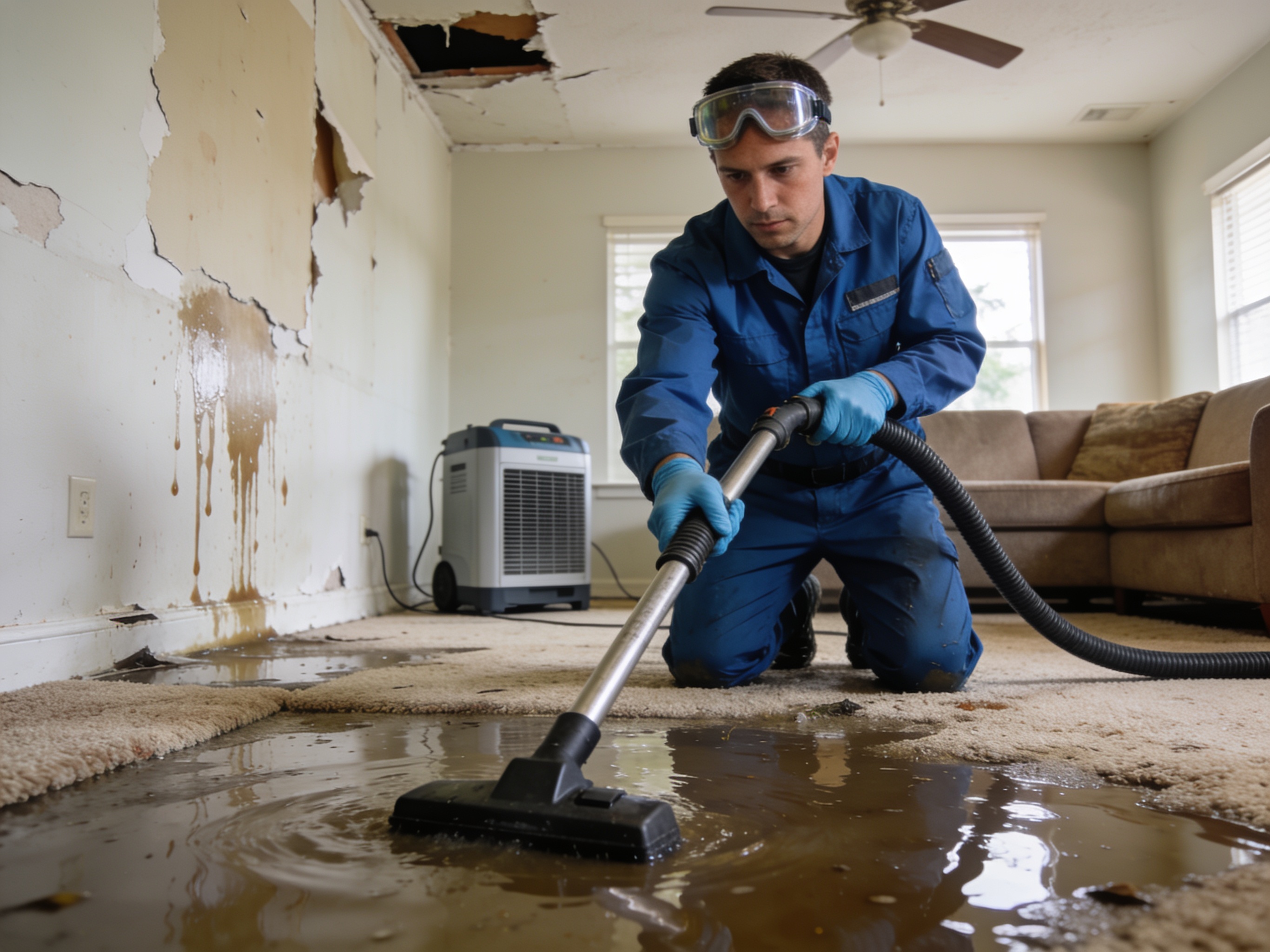
Port St. Lucie homes built from the 1980s onward often sit on concrete slabs that trap moisture under flooring when pipes burst or heavy rains push water under door thresholds. Technicians must pull baseboards and use moisture meters on the slab edges because trapped water quickly leads to hidden mold growth in the humid climate. Summer thunderstorms and hurricane season bring sudden downpours that overwhelm yard grading around many St. Lucie West and Tradition neighborhoods, sending water into garages and utility rooms before homeowners notice.
Extraction equipment must handle both clean water from supply lines and contaminated floodwater that carries silt from nearby canals. After removal, industrial air movers and dehumidifiers run for several days because the high ambient humidity in St. Lucie County slows evaporation compared with drier regions. Technicians document every step for insurance adjusters and check behind kitchen cabinets and under vanities where particleboard swells and delaminates within hours of saturation.
Older plumbing in sections of Port St. Lucie near U.S. 1 frequently fails at shut-off valves or washing machine hoses, sending water across tile and into wall cavities. Crews cut small inspection holes rather than tearing out entire walls until moisture mapping shows the full extent. Final verification includes checking relative humidity inside cavities to confirm readings stay below 50 percent before any reconstruction begins.
Technician insight
In Port St. Lucie the thing that catches most people out with Emergency Water Damage Restoration is how fast water travels under tile on a concrete slab during summer storms. You can extract the visible puddle but if you skip checking the slab edges near the garage in neighborhoods like St. Lucie West, moisture stays trapped and mold shows up weeks later behind baseboards.
Washing Machine Hose Failure in Tradition
A homeowner in Tradition noticed water spreading from the laundry room across tile toward the living area after a supply hose split. Extraction removed several gallons before it reached the slab edge, then moisture mapping revealed saturation under the adjacent wall. Targeted drying behind the cabinets prevented swelling of the particleboard vanity and kept the job contained to one room.
Emergency Water Damage Restoration Services We Offer
✓Burst Pipe Water Extraction
Immediate removal of standing water from supply line failures in kitchens and bathrooms before it reaches slab edges or subflooring.
✓Storm Flood Cleanup
Extraction and sanitation after heavy rains or hurricanes push canal water into garages and low-lying yards across St. Lucie County.
✓Sewage Backup Restoration
Safe removal and disinfection of contaminated water from clogged drains or lift station overflows common in older Port St. Lucie neighborhoods.
✓Appliance Leak Drying
Targeted drying behind refrigerators, dishwashers, and water heaters where slow leaks soak particleboard bases and nearby drywall.
✓Crawlspace Water Removal
Pumping and dehumidification in homes with raised foundations near the North Fork of the St. Lucie River where groundwater seeps in during wet seasons.
Emergency Water Damage Restoration Cost in Port St. Lucie, FL
| Service | Typical Range | What Affects It |
|---|---|---|
| Initial Water Extraction Visit | $450–$900 | Varies with amount of standing water and access difficulty in slab homes. |
| Full Drying Package | $800–$2,200 | Includes equipment rental and daily monitoring for typical room-sized loss. |
| Sewage Contamination Add-On | $600–$1,400 | Extra PPE and disinfection required for black water events. |
Ranges are typical for Port St. Lucie, FL and confirmed with an exact written quote before any work starts.
How it works
- 1
Arrival And Safety Assessment
Technicians arrive in Port St. Lucie, shut off water sources if needed, and identify electrical hazards before any extraction begins.
- 2
Water Extraction
Standing water is removed with portable pumps and truck-mounted units to prevent further saturation of slabs and wall cavities.
- 3
Moisture Mapping
Infrared cameras and meters locate hidden moisture behind cabinets, under tile, and in insulation throughout the affected rooms.
- 4
Drying And Monitoring
Air movers and dehumidifiers run until readings confirm the structure is dry, with daily checks logged for insurance documentation.
Pricing
Pricing depends on water volume, affected square footage, and whether contamination requires extra sanitation steps.