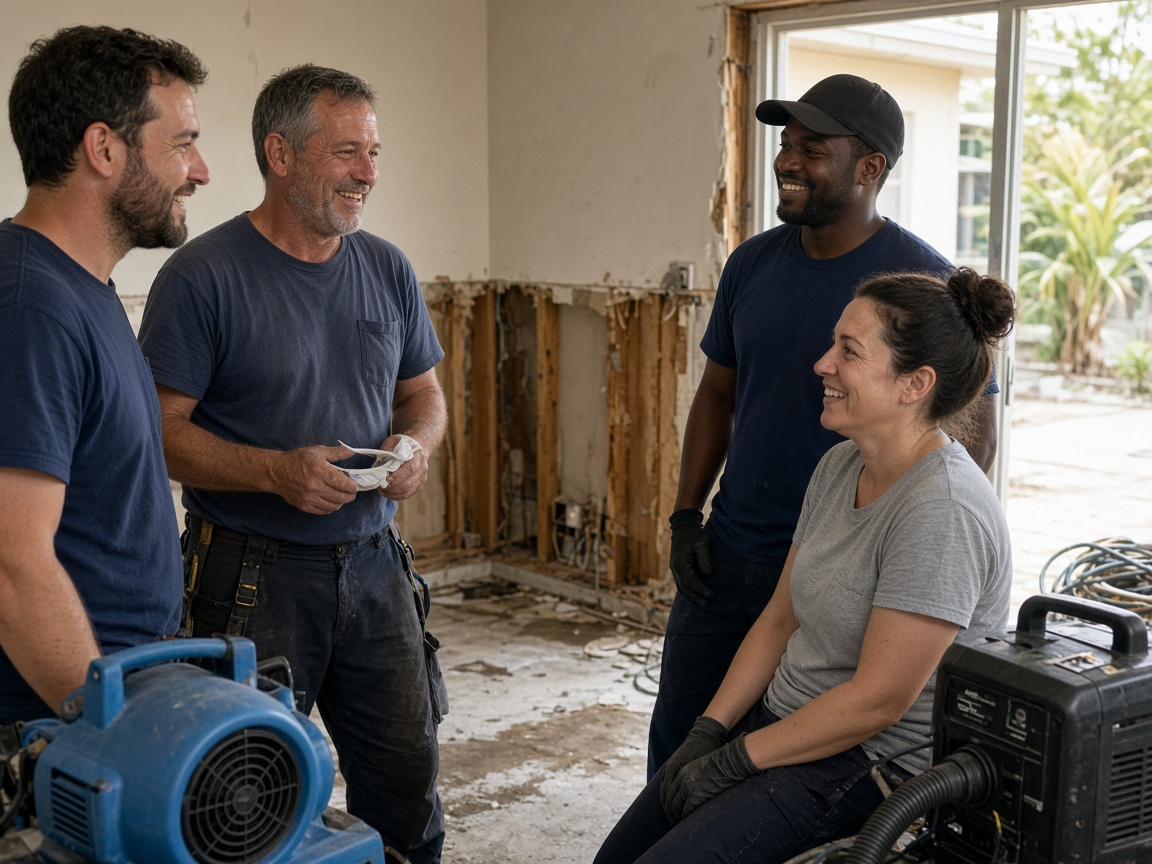
Palm Bay homes sit on flat sandy lots where heavy rains pool quickly against slab foundations. Our crews reach properties along NW Palm Bay Drive and nearby side streets from the shop at 625 NW Commodity Cove within minutes, setting up extraction and drying before moisture travels under tile or into wall cavities common in 1990s and early 2000s builds here.
Tropical downpours and occasional storm surge push water through low spots near Cove Road and into garages or utility rooms. We focus on rapid moisture mapping and targeted drying because the high water table and sandy soil in this pocket of 34986 let dampness spread fast once it enters a home.
Owners in Palm Bay call us for hidden leaks behind showers or after roof breaches during summer storms. We work street by street, using equipment sized for the smaller lots and narrow driveways typical of these subdivisions rather than larger commercial setups.
Around 14. Palm Bay
We regularly work near:
- 📍NW Palm Bay Drive
- 📍NW Commodity Cove
- 📍Cove Road
- 📍Palm Bay Road
- 📍Treasure Coast Elementary
Water Damage Restoration in 14. Palm Bay — Local Notes
- •Most Palm Bay houses rest on monolithic slabs poured in the 1990s-2000s; water that reaches the edge often travels under the slab and requires perimeter drying rather than simple surface extraction.
- •Narrow subdivision streets and low curbs mean our vans park on the shoulder; we stage equipment on the lawn to avoid blocking neighbors during multi-day drying jobs.
- •Sandy soil and a high water table cause water to linger after heavy rain, so we often run dehumidifiers longer than in higher-ground Port St. Lucie neighborhoods.
- •Tile roofs and stucco exteriors common here channel water behind walls during wind-driven rain; we check second-story soffits first when called after summer thunderstorms.